
How to Calculate Standard Deviation on TI-84 — Easy Step Guide
Standard deviation is one of the most frequently used measures in statistics. Whether you are analyzing classroom test scores, evaluating program outcomes at the state level, or drawing conclusions from a sample in a scientific study, knowing how to calculate standard deviation quickly and accurately matters. For many users — from high school students to field researchers — the TI-84 graphing calculator is a trusted companion.
This article explains, step by step, how to calculate standard deviation on TI 84, why the measure matters, historical context, practical implementation, state-level and programmatic impacts, real-world success stories, comparisons with other tools and methods, challenges, and future prospects. It also explores related topics such as regional impact, policy framework, state-wise benefits, women empowerment schemes, rural development, and social welfare initiatives where statistical literacy — including calculating standard deviation — plays a vital role.
Introduction: Why the TI-84 and Why Standard Deviation
The TI-84 family of calculators is ubiquitous in classrooms and examination halls. Many curricula and standardized tests permit — or even require — students to use a TI-84 to perform statistical analyses. Understanding how to calculate standard deviation on TI 84 bridges the gap between conceptual knowledge and applied analysis: the calculator handles the arithmetic while students focus on interpretation. Standard deviation quantifies variability: it tells you whether data points cluster tightly around the mean or spread widely.
In policy analysis and program evaluation — for instance when measuring the impact of a rural development scheme or tracking outcomes of women empowerment initiatives — standard deviation helps stakeholders understand consistency and equity of results across regions.
A Brief History of Standard Deviation and the TI-84
Statistics has evolved from descriptive tables to formalized measures of dispersion. The concept of variance and its square root, standard deviation, emerged in the 19th and early 20th centuries as statisticians sought rigorous ways to summarize spread. As electronic tools became available in the late 20th century, handheld calculators revolutionized classroom computation.
Texas Instruments’ TI line matured into the TI-83 and then the TI-84 series, devices that combined programmability with statistical functions. Today, knowing How to Find Standard Deviation on Calculator TI-84 is part of basic statistical literacy in many education systems, and the device’s portability means field enumerators and program evaluators can compute variability on site when assessing regional or state-level projects.
Core Concepts: Mean, Variance, and Standard Deviation
Before learning the procedural steps, briefly revisit the concepts. The mean (average) is the central tendency measure; variance is the average of squared deviations from the mean; standard deviation is the square root of variance, bringing the measure back into the original units. For a population, variance uses N in the denominator; for a sample, variance uses N−1 (Bessel’s correction) to provide an unbiased estimator. When you learn How to Find Standard Deviation on Calculator TI-84, be mindful whether you are working with a population or sample — the TI-84 offers options for both.
Step-by-Step: How to Calculate Standard Deviation on TI-84
This is the most practical section: concrete steps you can follow the first time you use a TI-84 for statistical work.
Preparing the Calculator
- Turn on your TI-84 and clear any old lists that might interfere with your data. The calculator stores data in lists called L1, L2, etc.
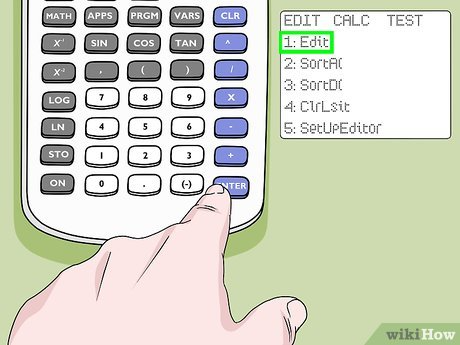
- Press the STAT button to enter the statistics menu.
Entering Data
- Choose 1:Edit… from the STAT menu by pressing ENTER. You will see lists like L1, L2.
- Enter each data value using the numeric keypad, pressing ENTER after each value. Typically, you will use L1 for simple datasets.
Selecting the Calculation
- After your data are entered, press STAT again.
- Arrow right to the CALC menu.
- Choose 1-Var Stats (option 1) and press ENTER.
Specifying the List
- If your data are in L1, the calculator assumes L1 by default when you press ENTER. If your data are in another list, type the list name (for example, 2ND 2 for L2) before pressing ENTER.
- The TI-84 will output several statistics: mean (x̄), sum of values (Σx), sum of squares (Σx²), and measures of spread.
Reading Standard Deviation
- On the TI-84 screen, find Sx and σx. Sx is the sample standard deviation (uses N−1), and σx is the population standard deviation (uses N).
- Use Sx when your data represent a sample (which is the most common case in classroom assignments and surveys); use σx when your data represent the entire population.
By following these steps, you will know how to calculate standard deviation on TI 84 for both sample and population contexts.
Practical Tips and Common Pitfalls
Using a calculator speeds computation but introduces the risk of misinterpretation. Here are common errors to avoid:
- Mixing up Sx and σx: Always identify whether your dataset is a population or sample.
- Forgetting to clear old lists: Residual data in lists can corrupt results.
- Entering grouped data incorrectly: For frequency tables, use the second column of a list or use STAT → Edit… with a frequency list and set Freq appropriately in the 1-Var Stats command.
- Misreading the TI-84’s screen: The calculator shows many statistics; Sx and σx are the ones for standard deviation.
These tips make your mastery of how to calculate standard deviation on TI 84 more reliable and accurate.
Example Problems: Walkthroughs
Concrete examples build confidence. Below are three example walkthroughs to demonstrate the steps live.
Example 1: Classroom Test Scores (Sample)
Imagine a teacher records scores of 12 students: 78, 82, 85, 90, 76, 88, 84, 79, 91, 73, 87, 80. To compute the sample standard deviation with your TI-84:
- Enter the scores into L1.
- Use STAT → CALC → 1-Var Stats → ENTER.
- Read Sx for the sample standard deviation.
This procedure teaches students not only how to calculate standard deviation on TI 84 but also how to interpret the variance in performance across a class.
Example 2: Regional Income (Population)
A small region reports household incomes for all 8 households: 30k, 35k, 28k, 32k, 31k, 29k, 33k, 30k. Here you treat the dataset as a population:
- Enter incomes into L1.
- Use 1-Var Stats and read σx as the population standard deviation.
This demonstrates applications in regional impact assessments and program targeting.
Example 3: Frequency Data for Field Surveys
Suppose frequencies are: score x: 1,2,3,4 with frequencies 5,7,3,2. Enter x in L1 and frequencies in L2. Then compute 1-Var Stats L1, L2 (press STAT → CALC → 1-Var Stats then L1, comma, L2). The TI-84 will compute the correct Sx and σx.
These hands-on examples reinforce how to calculate standard deviation on TI 84 under different real-world conditions.
Interpreting Results: What the Numbers Tell You
Calculating standard deviation yields a number, but interpretation makes it meaningful. A small standard deviation indicates tight clustering around the mean; a large one suggests wide dispersion. In public policy evaluations — for instance measuring the outcomes of state-wise benefits or social welfare initiatives — standard deviation provides insights into equity. When standard deviation is high across districts, policymakers must investigate whether some regions are left behind.
Use Cases in Public Policy and Development
Statistical literacy is crucial in monitoring scheme performance. Below are several use cases where knowing how to calculate standard deviation on TI 84 is practically useful.
Monitoring State-Wise Benefits
When a national program distributes resources to states, analysts may compute mean benefits per household and the standard deviation to assess consistency. A low standard deviation suggests equitable distribution; a high one raises flags for unequal implementation.
Evaluating Women Empowerment Schemes
Programs aimed at women’s economic participation often collect outcome indicators: income, asset ownership, or training completion. Standard deviation helps quantify variation in outcomes — crucial for designing targeted interventions and measuring regional impact.
Rural Development and Social Welfare
Rural development projects often span many villages. Field officers equipped with a TI-84 can compute standard deviations of measured indicators (crop yields, household income, access to sanitation) to quickly gauge variability and identify outlier communities requiring additional support.
In these contexts, understanding how to calculate standard deviation on TI 84 empowers frontline workers to produce timely, reliable summaries of program performance.
State-Level Impact and Success Stories
Across nations, states and provinces have used statistical measures to guide decisions. Consider hypothetical but illustrative examples:
- A state government used standard deviation measures to detect schooling outcome disparities across districts. By mapping mean scores and standard deviations, they identified low-mean, high-variance districts, prioritized resource allocation, and improved overall performance within two years.
- A women empowerment NGO tracked incomes of microcredit recipients across several districts. The TI-84 enabled enumerators to compute standard deviations on site, allowing immediate feedback and adaptive management. This led to higher repayment rates and more equitable benefits.
These stories underline how operational knowledge of how to calculate standard deviation on TI 84 can translate into meaningful policy adjustments and measurable impact.
Comparisons: TI-84 versus Other Tools
While the TI-84 is excellent for handheld, quick computations, several other tools exist. Understanding their strengths helps you choose the right tool for the task.
Spreadsheet Software (Excel, Google Sheets)
Spreadsheets are powerful for larger datasets and plotting. Functions like STDEV.S and STDEV.P correspond to sample and population standard deviation. Spreadsheets offer easy visualizations but require electricity and a device. The TI-84 is more portable and exam-friendly.
Statistical Software (R, SPSS, Stata)
These packages provide robust statistical analysis, reproducibility, and advanced techniques. They are preferred for complex modeling and large datasets. However, for quick field checks and classroom use, the TI-84’s simplicity often suffices.
Online Calculators and Mobile Apps
Many online calculators and smartphone apps compute standard deviation quickly but may not be permitted in exams or available in low-connectivity environments. The TI-84 combines privacy, portability, and exam acceptance.
Each option has tradeoffs; for many educational and field scenarios, mastering How to Find Standard Deviation on Calculator TI-84 remains indispensable.
Pedagogical Approaches: Teaching Students with TI-84
Teaching statistics with handheld calculators integrates procedural skill with conceptual understanding. Best practices include:
- Start with manual calculation to build intuition, then transition to the TI-84 to handle arithmetic complexity.
- Use real datasets relevant to students (local school data, regional health metrics) so students see the policy and developmental relevance.
- Emphasize interpretation: calculating Sx or σx is only useful if students contextualize the results.
- Incorporate comparisons with spreadsheets so students appreciate tool selection.
These methods make learning how to calculate standard deviation on TI 84 both effective and meaningful.
Challenges and Limitations
No tool is perfect. Several challenges arise in using the TI-84 in research and policy contexts:
- Dataset Size: The TI-84 can hold a limited number of data points in lists, so very large datasets require alternate tools.
- Reproducibility: Calculations performed on calculators are less reproducible than script-based analyses unless carefully logged.
- User Error: Misentered values, incorrect list selection, or failure to set frequency values lead to errors.
- Interpretation Mistakes: Users sometimes report Sx when population standard deviation is appropriate, or vice versa.
Mitigating these challenges requires training, proper documentation, and complementary tools when needed. Still, for many applied assessments in rural development and social welfare, the TI-84 remains a practical device when you know how to calculate standard deviation on TI 84 and interpret the outcomes.
Ethics and Data Quality Considerations
Statistics underpin policy decisions. Poorly computed or misinterpreted standard deviations can mislead stakeholders. Ethical principles include:
- Transparency: Document whether you used Sx or σx, how missing data were treated, and list sources.
- Quality Control: Double-check data entry, use random audits, and, where possible, compute results using another tool for cross-validation.
- Respect for Privacy: When analyzing sensitive data (income, health), deidentify datasets before sharing.
Applying these standards ensures that when practitioners use the TI-84, their knowledge of how to calculate standard deviation on TI 84 contributes to responsible and trustworthy analysis.
Integrating Standard Deviation into Policy Frameworks
Incorporating statistical measures into program monitoring strengthens policy frameworks. Governments and agencies can:
- Define standard metrics for outcome variability and include standard deviation thresholds in performance indicators.
- Train frontline staff on basic statistics and calculator use so data collected in the field are immediately useful.
- Use standard deviation to flag regions for deeper investigation; for example, a high standard deviation in benefit uptake may indicate uneven outreach or administrative barriers.
Such institutionalization links technical knowledge of how to calculate standard deviation on TI 84 to actionable governance practices.
Tools and Resources for Further Learning
Learners aiming to deepen their understanding can pair hands-on TI-84 practice with other resources:
- Official TI-84 manuals and tutorials for list management and statistics functions.
- Educational videos that demonstrate step-by-step procedures.
- Open courses on statistics covering variance, standard deviation, and sampling theory.
- Workshops on data collection and field methods to ensure quality inputs.
Combining these resources helps cement both the procedural skill of using a calculator and the analytical judgment to apply results to programs like state-wise benefits or rural development schemes.
Future Prospects: Statistical Literacy in a Data-Driven World
The importance of statistical literacy will only grow. As governments roll out data-driven programs and NGOs scale interventions, frontline staff who know how to calculate standard deviation on TI 84 and interpret results will remain crucial. Future developments may include:
- More integrated training modules in vocational and teacher education programs.
- Hybrid workflows where TI-84 is used for immediate on-site checks and cloud tools handle larger analyses.
- Greater emphasis on data ethics and transparent reporting, so standard deviation and other measures are used responsibly in assessing outcomes of policies and schemes.
The ability to calculate and interpret variation is fundamental to evidence-based decision making across sectors.
Success Stories: When Statistics Changed the Game
A few generalized success stories illustrate the impact of basic statistical skills:
- An education department used mean and standard deviation to redesign resource allocation after mapping test score variability; previously underserved districts received targeted support, narrowing achievement gaps.
- A health NGO tracked variance in immunization rates across villages; identifying high-variance areas allowed focused outreach, boosting overall coverage.
- A microfinance program monitored income variability of loan recipients; detecting high dispersion led to tailored financial literacy training that improved outcomes.
In each case, frontline staff who could compute statistics quickly — including knowing how to calculate standard deviation on TI 84 — made faster, data-informed choices.
Practical Checklist: Using TI-84 for Field Surveys
When deploying enumerators or students with TI-84 calculators, use a checklist to ensure quality:
- Calibrate and clear lists on every device before data collection.
- Standardize list naming conventions (L1 for values, L2 for frequencies).
- Train staff on distinguishing Sx vs. σx.
- Log calculations in field forms for transparency and reproducibility.
- Cross-validate a sample of results with a spreadsheet or statistical package.
This checklist operationalizes the technical knowledge of how to calculate standard deviation on TI 84 into reliable field practice.
Advanced Considerations: Grouped Data, Weighted Standard Deviation, and Programming the TI-84
The TI-84 can handle more complex scenarios:
- Grouped Data: Enter midpoints in L1 and frequencies in L2. Use 1-Var Stats L1, L2 to compute standard deviation.
- Weighted Standard Deviation: Treat weights as frequencies. For formal weighted estimators, consider exporting data to statistical software for exact formulas, but TI-84 provides a reasonable approximation for many field tasks.
- Programming: Advanced users can write TI-84 programs to automate repeated calculations, format outputs, or compute derived indicators. This can be helpful in large surveys or repeated monitoring rounds.
These techniques extend your capabilities beyond basic how to calculate standard deviation on TI 84 steps into practical customization and automation.
Comparison with Manual Calculation: When to Use Each
Learning manual calculation remains important for conceptual understanding, and the TI-84 is best for efficiency:
- Use manual calculation for small examples and pedagogical purposes.
- Use TI-84 for routine field computations, exams, and quick checks.
- Use statistical software for large datasets and reproducible research.
Understanding when to apply each method ensures that the technical skill of computing standard deviation is matched with appropriate rigor.
Conclusion: Mastery and Application
Mastering how to calculate standard deviation on TI 84 equips students, enumerators, and policymakers with a compact, reliable method for assessing variability. From classroom assessments to monitoring state-wise benefits, from analyzing outcomes of women empowerment schemes to guiding rural development projects, the ability to compute and interpret standard deviation informs better decision making. While calculators are not a substitute for a deeper understanding of statistical theory or for advanced software when necessary, they are invaluable tools for rapid, on-the-spot analysis and teaching practical statistical literacy.