
How to Find Standard Deviation on Calculator TI-84 — Step-by-Step Guide
Understanding variability is central to rigorous analysis in research, government policy, and program evaluation. Whether you are analyzing household incomes for rural development, measuring the impact of women empowerment schemes, or assessing state-wise benefits of a social welfare initiative, a reliable tool to compute dispersion is essential. This comprehensive guide explains How to Find Standard Deviation on Calculator TI-84, why it matters, and how to apply that tool across objectives such as evaluating regional impact or designing a data-driven policy framework. It blends statistical explanation with practical implementation guidance and real-world perspectives so you can turn numbers into credible, actionable insights.
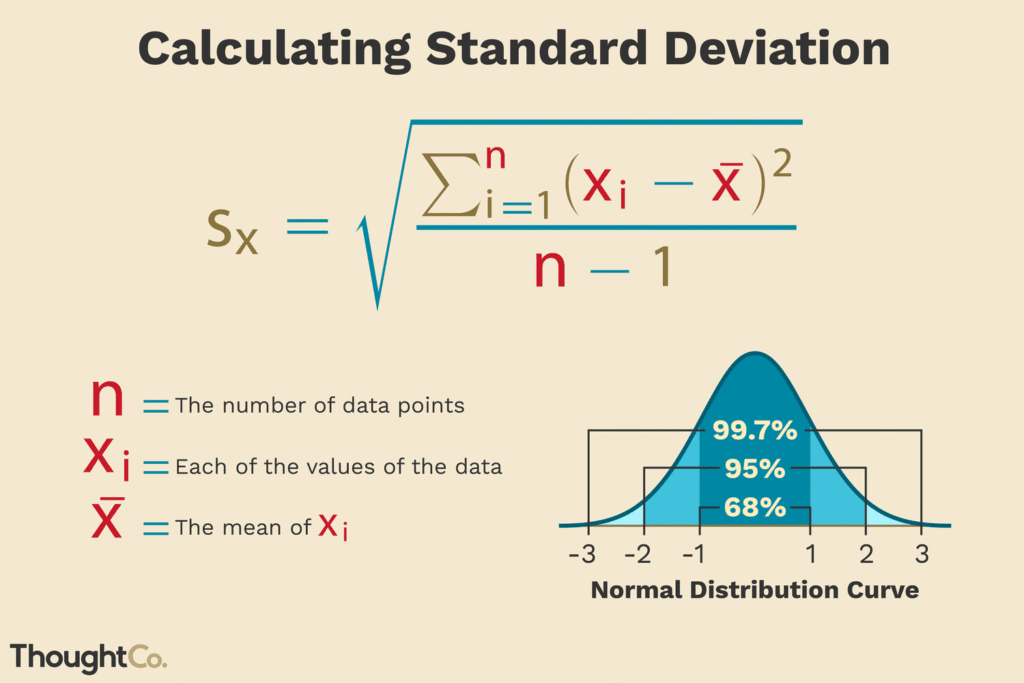
What Is Standard Deviation and Why It Matters
Standard deviation is a statistical measure that quantifies the amount of variation or dispersion in a dataset. The term describes how much individual observations deviate, on average, from the mean. In simple terms, a low standard deviation indicates that data points tend to be close to the average, while a high standard deviation reveals substantial spread.
Knowing How to Find Standard Deviation on Calculator TI-84 is about more than performing math; it’s about equipping yourself with a diagnostic instrument for uncertainty. When governments evaluate the equitable distribution of state-wise benefits or non-governmental organizations analyze program uptake across districts, measuring variability guides resource allocation, identifies outliers, and shapes corrective strategies.
A Brief History of Standard Deviation in Policy Analysis
The mathematical concept of variance and standard deviation emerged in probability theory and statistics in the 18th and 19th centuries, with key contributors such as Pierre-Simon Laplace and Karl Pearson. Over time, standard deviation evolved from a theoretical construct into a practical tool used in economics, public health, education, and policy evaluation. As administrative data collection improved through censuses and surveys, analysts required instruments—like a standard deviation calculator—to process large datasets efficiently.
Today, digital calculators and statistical software democratize access to dispersion measures. Learning How to Find Standard Deviation on Calculator TI-84 used to require manuals and arithmetic; now it’s about selecting the right online tool or software function and understanding assumptions behind population vs sample standard deviation.
Objectives: What You Achieve by Knowing How to Find the Standard Deviation Calculator
The primary objectives of mastering how to find the standard deviation calculator are:
- To accurately measure variability in socioeconomic indicators (income, test scores, health metrics).
- To compare distributional patterns across regions, states, or demographic groups.
- To support evidence-based decisions in program design and monitoring, such as rural development schemes or women empowerment initiatives.
- To detect anomalies or outliers that require qualitative investigation or targeted interventions.
- To communicate uncertainty to stakeholders in clear, quantitative terms.
Armed with a standard deviation calculator, evaluators can integrate dispersion analysis into routine monitoring and reporting, strengthening the policy framework that governs public programs.
How to Find the Standard Deviation Calculator: Practical Paths
There are multiple ways to find a standard deviation calculator, and the right option depends on your context—speed versus depth, single calculation versus batch processing, or desktop analysis versus mobile use.
Online Tools and Web Calculators
One of the fastest methods is to use an online standard deviation calculator. Search engines yield tools where you paste a list of numbers and receive the standard deviation instantly. When you search for How to Find Standard Deviation on Calculator TI-84 online, prioritize calculators that:
- Offer both population and sample standard deviation options.
- Allow CSV or spreadsheet uploads for larger datasets.
- Provide additional statistics (mean, median, variance) for context.
- Produce reproducible outputs or downloadable reports.
For public programs where state-wise benefits must be compared across many regions, web calculators can speed quick checks, but always verify computations against trusted software for high-stakes decisions.
Spreadsheet Software (Excel, Google Sheets)
Spreadsheets are ubiquitous in government and NGO offices. Knowing How to Find Standard Deviation on Calculator TI-84 inside Excel or Google Sheets is indispensable:
- In Excel, use functions like STDEV.P (population standard deviation) and STDEV.S (sample standard deviation), or the legacy STDEV.
- In Google Sheets, use STDEVP or STDEV.S depending on whether you treat your data as a population or sample.
Spreadsheets are especially useful when working with administrative datasets measuring regional impact or tracking program indicators across multiple months or years.
Statistical Packages (R, Python, Stata, SPSS)
For deeper analysis—such as modeling and hypothesis testing—statistical packages are preferred. Learning How to Find Standard Deviation on Calculator TI-84 in these environments means knowing the function or command:
- In R: sd(x) for sample standard deviation; use sqrt(var(x) * (n-1)/n) to switch to population.
- In Python with NumPy: np.std(arr, ddof=0) for population and np.std(arr, ddof=1) for sample.
- In Stata: sd is part of summary commands like summarize varname, detail.
- In SPSS: use DESCRIPTIVES or EXAMINE procedures.
Statistical software integrates dispersion measures into robust analysis pipelines important for evaluating complex interventions, like multifaceted rural development projects.
Mobile Apps and Built-in Calculators
When field teams collect survey data, mobile apps (e.g., ODK, KoboToolbox) may integrate basic analytics or export data for offline standard deviation calculation. If you are learning How to Find Standard Deviation on Calculator TI-84 while conducting fieldwork, choose mobile-friendly solutions that export to CSV for later analysis.
How to Compute Standard Deviation: Conceptual Steps
Understanding the calculation helps you validate automated outputs from any calculator:
- Compute the mean (average) of all observations.
- Subtract the mean from each observation to obtain deviations.
- Square each deviation to remove negative signs.
- Average the squared deviations (variance). For samples, divide by n – 1; for populations, divide by n.
- Take the square root of the variance to obtain the standard deviation.
Knowing how to Find Standard Deviation on Calculator TI-84 includes verifying whether it computes sample or population standard deviation and whether it performs rounding or handles missing values appropriately.
Implementation in Policy Evaluation and Program Management
Translating statistics into policy action requires embedding standard deviation analysis into routines. Here’s how that implementation typically looks across stages of program management.
Design and Baseline Measurement
At the design phase of a social welfare initiative, analysts collect baseline data to understand heterogeneity. A standard deviation calculator helps determine baseline dispersion in indicators such as household income, nutrition scores, or school attendance. High variability may suggest targeted interventions rather than blanket policies.
Monitoring and Midline Assessments
During implementation, calculating standard deviation over time helps track whether programs reduce inequality or improve uniformity across regions. For instance, if a women empowerment scheme aims to narrow the gender gap in labor force participation, falling standard deviation across districts may indicate success.
Evaluation and Impact Assessment
In formal evaluations, standard deviation informs effect heterogeneity. By computing dispersion within treatment and control groups, evaluators can assess whether outcomes are consistent or concentrated among subpopulations. Knowing How to Find Standard Deviation on Calculator TI-84 within analytic software ensures reproducible and defensible impact estimates.
State-Level Impact: Examples and Considerations
State governments often manage regionally diverse populations. Standard deviation analysis becomes a critical tool to compare state-wise benefits and identify disparities.
- When comparing per-capita benefits across states, a high national standard deviation in benefit amounts signals uneven distribution. Policymakers can use a standard deviation calculator to quantify that imbalance.
- For education programs, measuring standard deviation of test scores across districts helps prioritize states requiring pedagogical reforms or additional resources.
- In health equity analysis, standard deviation of immunization rates across districts highlights areas lagging behind the mean that need targeted outreach.
These examples show that understanding How to Find Standard Deviation on Calculator TI-84 is essential not only for analysis but for communicating inequity to decision-makers.
Success Stories: How Standard Deviation Calculations Improved Programs
Concrete instances illustrate the power of dispersion metrics:
- A state-level rural development authority used standard deviation analysis of household income to identify districts with exceptionally high income variability. Targeted livelihood programs were deployed, resulting in reduced income dispersion over three years.
- An NGO implementing a women empowerment scheme measured empowerment indices across villages and used standard deviation to track consistency of outcomes. By shifting from a uniform training bundle to customized modules in high-variance areas, the NGO achieved more uniform gains.
- A public health department monitored the standard deviation of vaccination rates across urban wards. Identifying wards with high negative deviation led to micro-campaigns, reducing overall variance and improving herd immunity.
In each case, the organizations leveraged standard deviation calculators—either spreadsheet functions or statistical packages—to monitor changes and adapt implementation.
Challenges and Misuses
While standard deviation is powerful, misuse or misinterpretation can mislead decisions.
Ignoring the Data Context
A standard deviation calculator returns a number but not the story. High dispersion may be driven by outliers, measurement error, or structural heterogeneity. Analysts must complement standard deviation with medians, interquartile ranges, and qualitative investigation.
Confusing Sample and Population Measures
Using the wrong formula (sample vs population) undercuts inference. When documenting how to find the standard deviation calculator, ensure the tool’s default aligns with your data context.
Overreliance Without Further Analysis
Standard deviation alone does not reveal causality. Programs should avoid treating reduced dispersion as definitive proof of success without corroborating evidence.
Data Quality and Missing Values
Administrative datasets can contain missing or misreported values. A calculator that does not adequately handle missing data can skew standard deviation estimates. Robust data cleaning and transparent handling of missingness are essential.
Comparing Standard Deviation with Other Measures of Dispersion
Standard deviation sits among several metrics analysts use to describe spread. Understanding differences helps pick the right tool.
- Variance: The square of standard deviation; useful in mathematical models but less intuitive than standard deviation.
- Interquartile Range (IQR): Measures the middle 50% spread; robust to outliers and helpful when data is skewed.
- Mean Absolute Deviation (MAD): Average absolute deviation from the mean; sometimes preferred for interpretability.
- Coefficient of Variation (CV): Standard deviation divided by the mean; useful for comparing dispersion across variables with different scales.
Knowing How to Find Standard Deviation on Calculator TI-84 does not preclude exploring these complementary measures. In policy analysis, deploying multiple metrics yields a fuller picture of equity and program impact.
Best Practices When Using a Standard Deviation Calculator
To get useful, defensible results, follow these operational practices:
- Decide whether your dataset represents a sample or the entire population and choose the corresponding calculator setting.
- Check for outliers and assess whether they reflect real variation or data entry errors.
- Use additional descriptive statistics and visualizations (histograms, boxplots) to contextualize standard deviation.
- Document steps and calculator settings so analyses are reproducible and transparent for stakeholders.
- When communicating results to non-technical audiences, translate dispersion into intuitive terms (e.g., “most districts fall within X units of the mean”) and tie to policy implications.
These practices enhance the value of knowing How to Find Standard Deviation on Calculator TI-84 for applied work.
Integrating Standard Deviation into a Policy Framework
Embedding dispersion analysis into a policy framework strengthens evidence-based governance. Consider these practical integration points:
- Indicator Dashboards: Add standard deviation alongside averages in routine dashboards to track equity and consistency across geographic units.
- Targeting Rules: Use dispersion thresholds to trigger targeted interventions in regions where variability exceeds acceptable levels.
- Resource Allocation: Allocate funds not just based on mean need but adjusting for variance to stabilize outcomes in high-variability areas.
- Performance Contracts: Include dispersion reduction as a metric in performance agreements with implementing partners, encouraging equitable delivery.
By routinely using a standard deviation calculator in these mechanisms, agencies make policies responsive to both central tendency and inequality.
Case Study: Applying Standard Deviation to Rural Development Metrics
Imagine a national rural livelihoods program seeking to understand agricultural yield variability across districts. By collecting yield data and employing a standard deviation calculator:
- Analysts determine that the national average yield is moderate but standard deviation is large, with several districts far below the mean.
- Mapping standard deviation reveals clusters of high variability linked to climate vulnerability.
- The program designs drought-resistant crop trials for high-variance districts and scales irrigation support where variability is linked to water access.
- Over subsequent seasons, analysts monitor standard deviation to evaluate whether interventions reduce yield variability, not just increase mean yields.
This approach demonstrates how to Find Standard Deviation on Calculator TI-84 translates into strategic design and ongoing program improvement.
Frequently Encountered Questions About Finding a Standard Deviation Calculator
This section addresses common queries that practitioners and students ask when learning How to Find Standard Deviation on Calculator TI-84.
Choosing the Right Calculator for Policy Work
For routine monitoring, spreadsheets often suffice. When working with large administrative datasets or conducting causal inference, prefer statistical packages. Always confirm whether the calculator handles sample or population standard deviation appropriately.
Handling Skewed Data and Outliers
If your data is highly skewed or contains outliers, pair standard deviation with robust measures like IQR or MAD. Visualization helps reveal whether dispersion is meaningful or driven by a few extreme values.
Automating Standard Deviation Calculations
For repeated monitoring, automate calculations via scripts (Python/R) or spreadsheet macros. Automation ensures consistency and accelerates state-level comparisons across many indicators.
Interpreting Standard Deviation in Context
A standard deviation is meaningful only relative to the mean and the measurement scale. Use the coefficient of variation to compare dispersion across different indicators, or convert standard deviation into percentiles to communicate outcomes more clearly.
Future Prospects: Innovations and Growing Relevance
As data sources diversify—satellite imagery, mobile data, administrative registries—the role of standard deviation analysis grows. Innovations that will shape how analysts learn How to Find Standard Deviation on Calculator TI-84 include:
- Embedded analytics in data collection platforms enabling near-real-time variance monitoring.
- Geospatial dispersion measures combining standard deviation with spatial clustering to find geographic pockets of disadvantage.
- Interactive dashboards that let policymakers toggle between population and sample standard deviation for sensitivity checks.
- Machine learning models that incorporate dispersion as a feature to predict where interventions are most needed.
These trends mean that standard deviation calculators will increasingly be integrated into policy ecosystems rather than used as standalone tools.
Ethical Considerations and Responsible Use
Data-driven policy carries ethical obligations. When using a standard deviation calculator:
- Avoid using dispersion metrics to stigmatize regions or communities. Instead, use them to justify supportive, equitable interventions.
- Ensure transparent reporting of methods and assumptions, especially when standard deviation informs large budgetary allocations.
- Protect individual-level data privacy when computing dispersion on sensitive metrics, and report aggregate figures where possible.
Responsible use converts statistical insight into respectful and effective governance.
Tools and Resources: A Checklist for Practitioners
Practitioners asking How to Find Standard Deviation on Calculator TI-84 should consider a short checklist:
- Confirm whether your data is a sample or population.
- Choose a tool that handles your data scale (online calculator for small sets, statistical software for large datasets).
- Validate calculator outputs against a known dataset or manual computation for quality assurance.
- Document settings, especially degrees of freedom and handling of missing values.
- Pair standard deviation results with visualizations and robust statistics.
Following this checklist improves the credibility and usefulness of analyses informing regional impact, policy frameworks, state-wise benefits, and social welfare initiatives.
Challenges Ahead: Data Gaps and Capacity Constraints
While the statistical toolkit is mature, two ongoing challenges remain:
- Data Gaps: Many regions lack timely, high-quality data, complicating variance analysis. Strengthening administrative data systems improves the accuracy of standard deviation estimates.
- Capacity Constraints: Frontline staff may be unfamiliar with dispersion metrics. Investments in training and user-friendly calculators help embed statistical thinking in program management.
Addressing these challenges ensures that knowing How to Find Standard Deviation on Calculator TI-84 translates into better outcomes at the state and local levels.
Recommendations for Organizations
For NGOs, government agencies, and evaluators, the following recommendations make standard deviation analysis operationally effective:
- Institutionalize standard deviation reporting in monitoring frameworks for all major indicators.
- Provide simple templates and calculator links for field teams to compute dispersion at the point of data collection.
- Train mid-level managers to interpret standard deviation and integrate findings into program adaptation.
- Use standard deviation alongside equity-focused targets to ensure interventions reduce both mean gaps and variability.
These steps help align statistical practices with the broader goals of equitable program delivery and regional impact.
Conclusion
Knowing How to Find Standard Deviation on Calculator TI-84 is a practical, high-value skill for anyone working with data in the public or non-profit sector. From baseline diagnostics to rigorous impact evaluation, standard deviation adds nuance to averages, flags inequities, and guides evidence-based choices. When combined with complementary metrics and sound domain knowledge—about regional impact, policy frameworks, and state-wise benefits—dispersion analysis elevates program design, fosters more equitable outcomes, and supports accountability.
Whether you choose an online web calculator for quick checks, the built-in functions of spreadsheets for routine reporting, or statistical software for deep analysis, the imperative is the same: pair the calculator with context, document your methods, and use results to design more inclusive and resilient policies.